In the world of industrial engineering, efficiency is driven by thermodynamics. When compressing air, managing heat is the greatest challenge. As a premier Netherlands-based manufacturer, EVER POWER leverages the incredible thermal properties of water to master this challenge. Let’s explore the science of isothermal compression and why it makes water-injected systems vastly superior in energy efficiency.
1. Product Overview: Mastering Thermodynamics
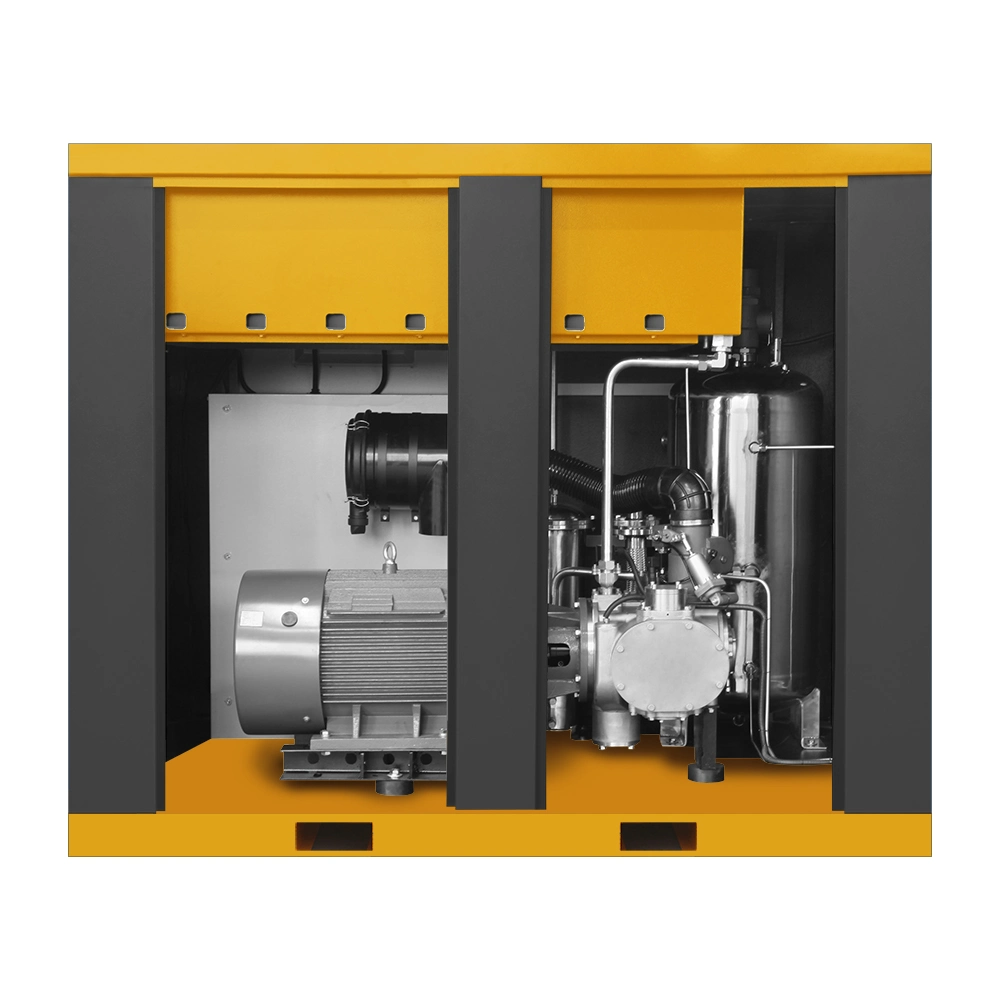
Standard compressors operate adiabatically, meaning the heat generated during compression stays in the air, causing temperatures to spike and wasting energy. Our water-injected compressors operate near isothermally, meaning the temperature remains constant throughout the compression cycle.
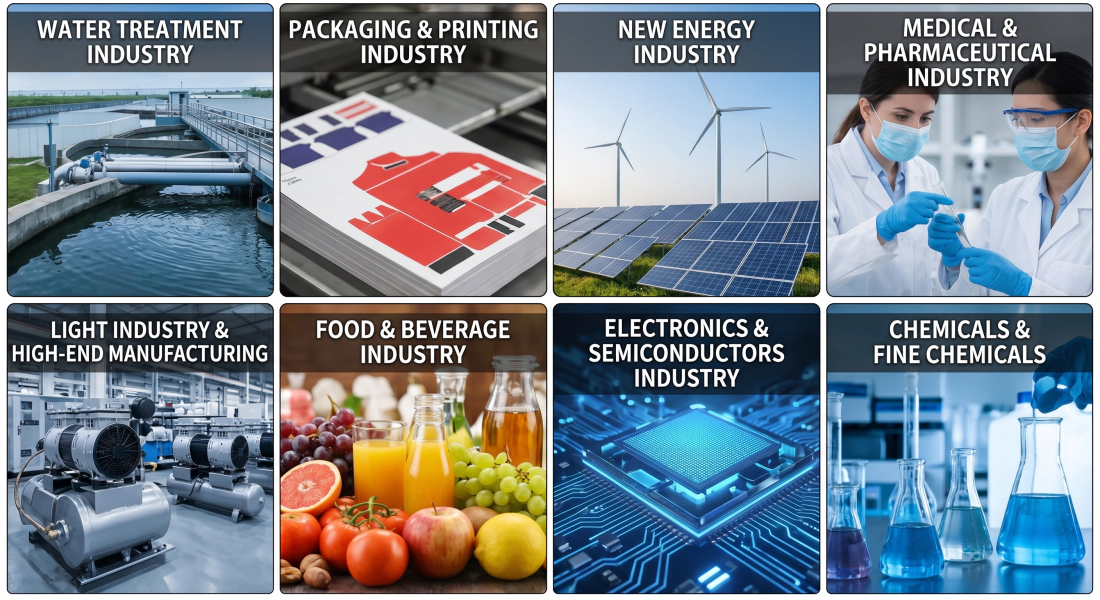
- Quick Industry Applicability: High-energy consuming facilities such as glass manufacturing, continuous textile weaving, and large-scale chemical processing.
- Core Advantages Summary: Massive reductions in electrical power consumption, significantly extended lifespan of internal components due to low thermal stress, and 100% oil-free air delivery.
2. Technical Parameters (Efficiency Focus)
To demonstrate the impact of isothermal design, view the performance metrics of our high-capacity Variable Frequency Drive (VFD) models.
| Model (VFD Series) | Motor (kW/HP) | Discharge Temp (degrees C) | Capacity Range (m3/min) | Compression Stages |
|---|---|---|---|---|
| EP-WI-45 VFD | 45 kW / 60 HP | < 50 (Isothermal) | 3.5 – 7.6 | 1 Stage |
| EP-WI-75 VFD | 75 kW / 100 HP | < 50 (Isothermal) | 6.0 – 13.5 | 1 Stage |
| EP-WI-132 VFD | 132 kW / 175 HP | < 50 (Isothermal) | 12.5 – 24.0 | 1 Stage |
| Standard Dry Screw | 132 kW | 150 – 200 (Adiabatic) | N/A | 2 Stages |
3. Working Principle: The Science Explained
Boyle’s Law and Charles’s Law dictate that as pressure increases, temperature increases. Hot air expands. If you try to compress hot, expanding air, the electric motor has to work much harder.
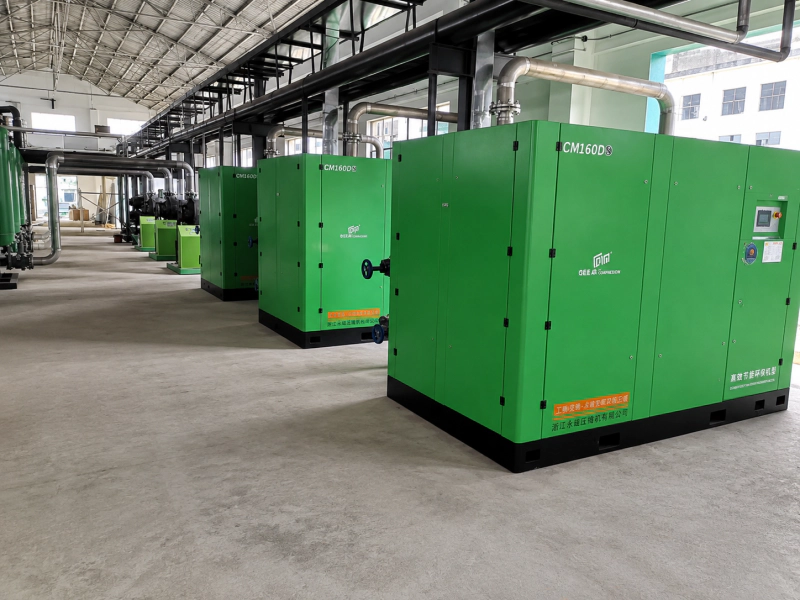
Water has an exceptionally high specific heat capacity. By injecting atomized, purified water directly into the compression chamber while the rotors are turning, the water instantly absorbs the heat of compression. The air temperature never exceeds 50 degrees C. Because the air remains cool, it remains dense. Compressing dense air requires significantly less mechanical force. This allows EVER POWER to reach industrial pressures (up to 10 bar) in a single, highly energy-efficient stage, whereas dry screw machines require two stages and a massive intercooler to manage their extreme heat.
4. Five Core Advantages of Isothermal Cooling
📉 Massive Energy Savings
Requires up to 15% less electrical power to produce the same volume of air compared to traditional high-heat dry screw compressors.
🌀 Single Stage Simplicity
Avoids the pressure drops and mechanical complexities of pushing air through two separate compression stages and intercoolers.
🛠️ Extended Component Life
Running at 50 degrees C instead of 200 degrees C drastically reduces thermal expansion and stress on rotors, bearings, and seals.
❄️ Downstream Efficiency
Because the air exiting the compressor is already cool, your downstream refrigerated dryers consume less energy to reach the required dew point.
🔥 Easy Heat Recovery
The closed-loop water system absorbs 90% of the compression heat, which can easily be recovered via a heat exchanger to pre-heat factory boiler water.
5. Structure and Material Craftsmanship
To safely handle constant water injection, the air-end is constructed from premium anti-corrosive materials. EVER POWER utilizes solid bronze alloys or high-grade coated stainless steel for the main housing. The rotors are machined from advanced polymer-ceramic composites. These materials ensure that the internal components do not rust or degrade in the wet environment, allowing the isothermal cooling process to function flawlessly for decades.
6. Typical Application Scenarios
The energy savings compound rapidly in these environments:
- Automotive Manufacturing: Base-load air for robotic assembly lines running 24/7. A 10% energy saving equates to massive annual cost reductions.
- Textile Mills: Air-jet looms require immense volumes of clean air continuously. Isothermal compression provides the lowest cost per cubic meter of air.
- Chemical Refineries: Volatile environments benefit from the extreme safety of having a low discharge temperature (under 50 degrees C), reducing the risk of thermal ignition in pipelines.
7. Selection Guide: Optimizing for Energy
To maximize your return on investment, ensure your setup is correct:
- Demand VFD Integration: Isothermal efficiency is best paired with a Variable Frequency Drive (VFD). This ensures the compressor slows down perfectly to match fluctuating factory demand, eliminating wasteful unloaded running.
- Size the Air Receiver: Install a sufficiently large air receiver tank (at least 1/3 of the compressor’s output capacity) to smooth out pressure spikes and reduce motor start/stop cycles.
- Plan for Heat Recovery: If your factory uses hot water (for cleaning, boilers, or space heating), ask our engineers about the built-in energy recovery heat exchangers to capture the heat absorbed by the compressor’s water loop.
8. Brand Comparison: The Efficiency Reality
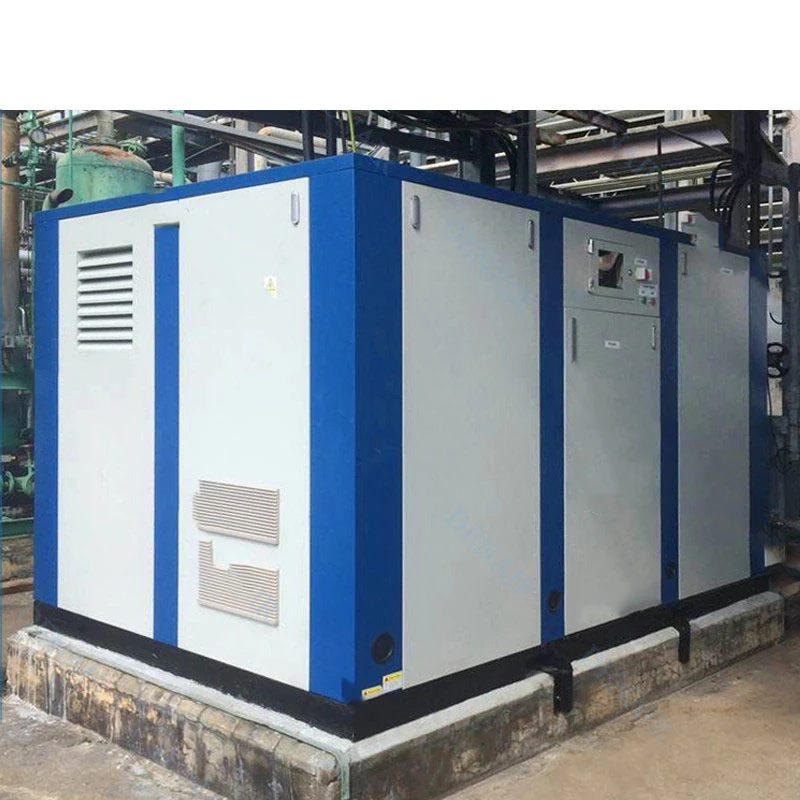
Disclaimer: We explicitly state that we mention third-party technologies (e.g., legacy dry screw brands) solely for technical comparison, reference, and to assist customers in evaluating thermodynamics. We are an independent manufacturer (EVER POWER). We respect all intellectual property rights.
| Efficiency Metric | EVER POWER (EP-WI Series) | Standard Dry Screw Brands |
|---|---|---|
| Compression Process | Near-Isothermal (Cool) | Adiabatic (Hot) |
| Air Purity | ISO 8573-1 Class 0 | ISO 8573-1 Class 0 |
| Specific Energy (kW/m3) | Highly Efficient (Lower is better) | Moderate to Poor |
| Capital Expenditure | Cost-Effective / Fast ROI | High Premium Markup |
9. Quality Certification & Service Commitment
Operating from the Netherlands, EVER POWER engineers equipment strictly to CE and ISO 9001 standards. We are confident in the longevity provided by isothermal cooling, which is why we offer a comprehensive 2-year system warranty and a specialized 5-year guarantee on the main air-end, backed by our global technical support network.
10. Global Case Studies (Energy Savings)
📍 Client: Glass Manufacturing in France
Application: Continuous pneumatic automation.
Feedback: “Energy is our highest operating cost. Switching from an older two-stage dry screw to the EVER POWER 132kW water-injected unit dropped our specific energy consumption by 11%. The thermal science genuinely translates into financial savings.”
📍 Client: Pharmaceutical Plant in Japan
Application: Clean room air and packaging.
Feedback: “We required Class 0 air but were struggling with the extreme heat output of dry screws in our utility room. The EVER POWER machine runs so cool that we didn’t have to upgrade the utility room’s HVAC system. Brilliant engineering.”
📍 Client: Commercial Bakery in the USA
Application: Flour fluidization.
Feedback: “We integrated the heat recovery system. The water loop of the compressor now pre-heats the water for our industrial washing stations. We saved money on electricity and natural gas simultaneously.”
11. Optimize Your Factory’s Efficiency
Do not let thermodynamic inefficiency drain your budget. Upgrade to the intelligent, cool-running science of water-injected compressors. Contact the EVER POWER engineering team today for a free energy audit and a customized return-on-investment calculation.
12. Frequently Asked Questions (FAQ)
Q1: Why don’t all compressors use water injection if it’s so efficient?
A: Water injection requires highly advanced metallurgy (bronze, ceramics, stainless steel) and integrated reverse osmosis systems to prevent rust and scaling. Many legacy manufacturers built their factories around cheap cast iron (which requires oil to prevent rust) and have been slow to adopt this superior technology.
Q2: If the air is cool, is it still wet?
A: Yes. Because water is used in compression, the output air is cool (under 50 degrees C) but at 100% relative humidity. You must install a refrigerated or desiccant air dryer downstream to remove this moisture before it reaches your factory floor.