When outfitting a factory with a new pneumatic system, the first major decision is choosing the right foundational technology. The debate usually centers on Water Injected (Oil-Free) versus Oil-Flooded (Lubricated) compressors. As a premium engineering manufacturer based in the Netherlands, EVER POWER is uniquely positioned to explain the critical differences, helping you make the safest and most economical choice for your business.
1. Product Overview: The Philosophy of Purity vs. Filtration
The core difference lies in how the machines handle friction and heat.
- Oil-Flooded Compressors: Use synthetic oil to seal and cool the rotors. The air mixes heavily with the oil. The system then attempts to filter this oil back out before the air reaches your factory.
- EVER POWER Water Injected Compressors: Use purified RO water to seal and cool. Oil is physically absent from the compression process, guaranteeing intrinsically pure air.
- Core Advantages Summary (Water Injected): Delivers guaranteed ISO 8573-1 Class 0 air, eliminates the high costs of oil disposal, and removes the risk of catastrophic pipeline contamination.
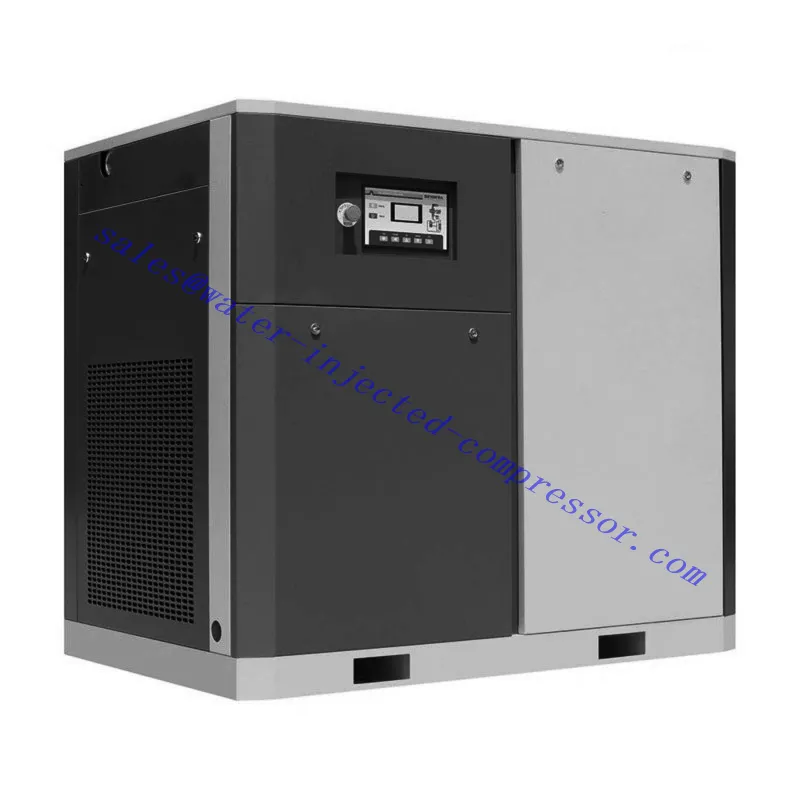
2. Technical Parameters (Comparison Matrix)
Review how our EP-WI series stacks up against standard oil-flooded machinery in terms of air quality and maintenance requirements.
| Specification / Feature | EVER POWER Water Injected | Standard Oil-Flooded Screw |
|---|---|---|
| ISO 8573-1 Oil Class | Class 0 (Zero Oil) | Class 1, 2, or 3 (Oil present) |
| Lubricant Used | Purified RO Water | Synthetic Oil (46 or 68 grade) |
| Operating Temperature | < 50 degrees C (Isothermal) | 80 – 100 degrees C |
| Condensate Waste | Clean Water (Drain safely) | Toxic Oil/Water Mix (Requires treatment) |
3. Working Principle Differences
In an oil-flooded machine, the air is deliberately saturated with oil. The compressor then relies on an air/oil separator tank and a series of downstream coalescing and carbon filters to catch the oil. Over time, these filters degrade, and microscopic oil vapor inevitably slips into the factory piping.
EVER POWER water-injected machines flip this logic. By injecting Reverse Osmosis water into the chamber, the air is cooled and the rotors are sealed by water alone. The air and water mixture exits into a separation vessel where the water falls out naturally. The resulting air is completely devoid of oil. The water is continually filtered, cooled, and re-used in a closed internal loop.
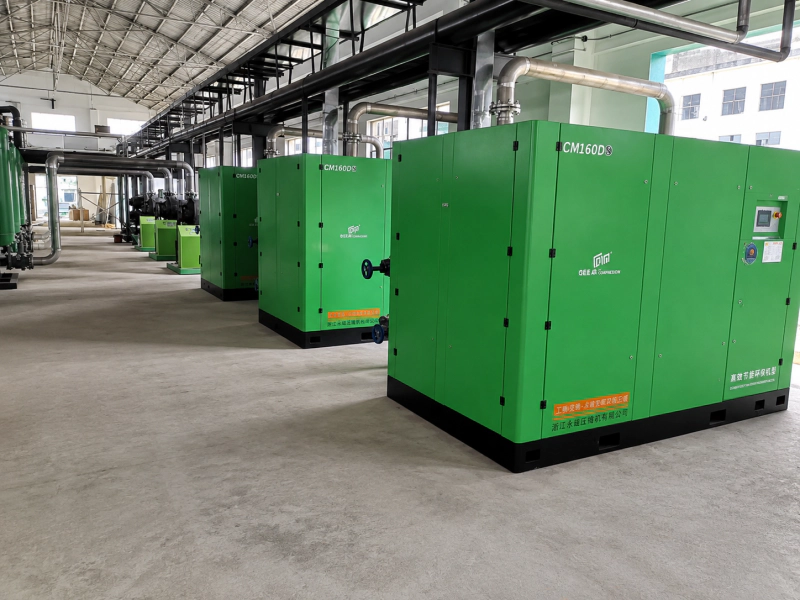
4. Five Core Advantages of Choosing Water Injected
🛡️ Absolute Brand Protection
If you produce food, medicine, or electronics, zero oil means zero risk of product recalls due to hydrocarbon contamination.
💰 Eliminate Filter Overhead
You never have to buy, stock, or replace expensive inline carbon filters, coalescing filters, or bulky air/oil separators.
⚡ Prevent Pressure Drops
Inline oil filters cause massive pressure drops in your piping. Removing them allows you to lower the compressor’s operating pressure, saving electricity.
🌿 Eco-Friendly Compliance
Avoid strict environmental fines. The condensate from a water-injected machine can be poured directly into a drain without toxic waste handling.
🔇 Quieter Operations
Water-injected machines run at lower speeds and lower temperatures, resulting in significantly lower noise and vibration levels on the factory floor.
5. Structure and Craftsmanship
Oil-flooded machines use basic cast iron because the oil inherently prevents rust. Moving to water injection requires advanced materials. EVER POWER utilizes solid bronze alloys or heavily coated stainless steel for the main housing. The rotors are made from specialized polymer-ceramics. This metallurgical upgrade ensures that the machine remains entirely rust-free despite operating in a 100% wet environment.
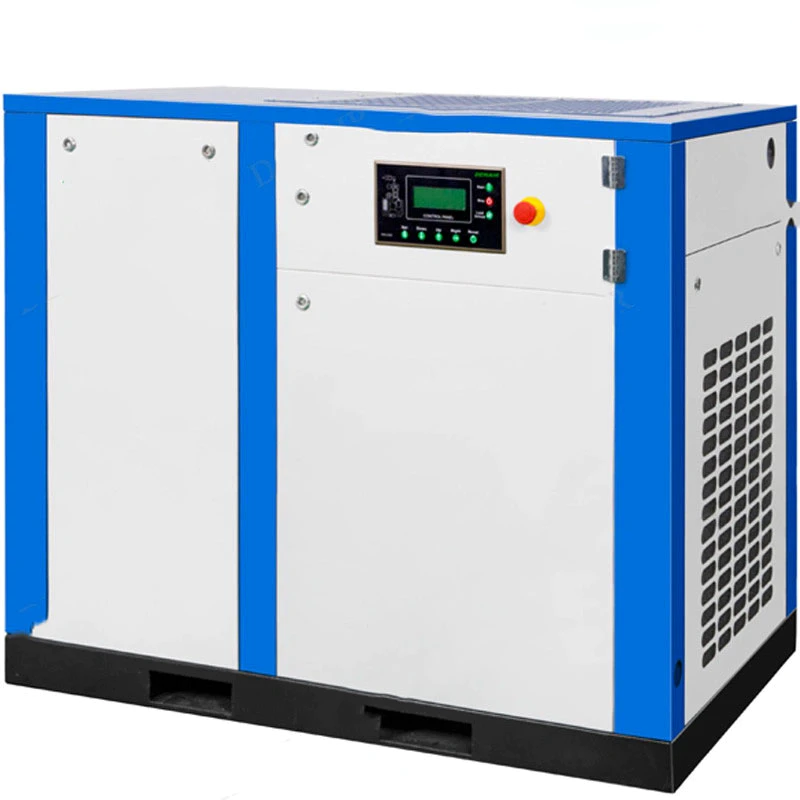
6. Typical Application Scenarios
Choose your technology based on your industry’s risk tolerance:
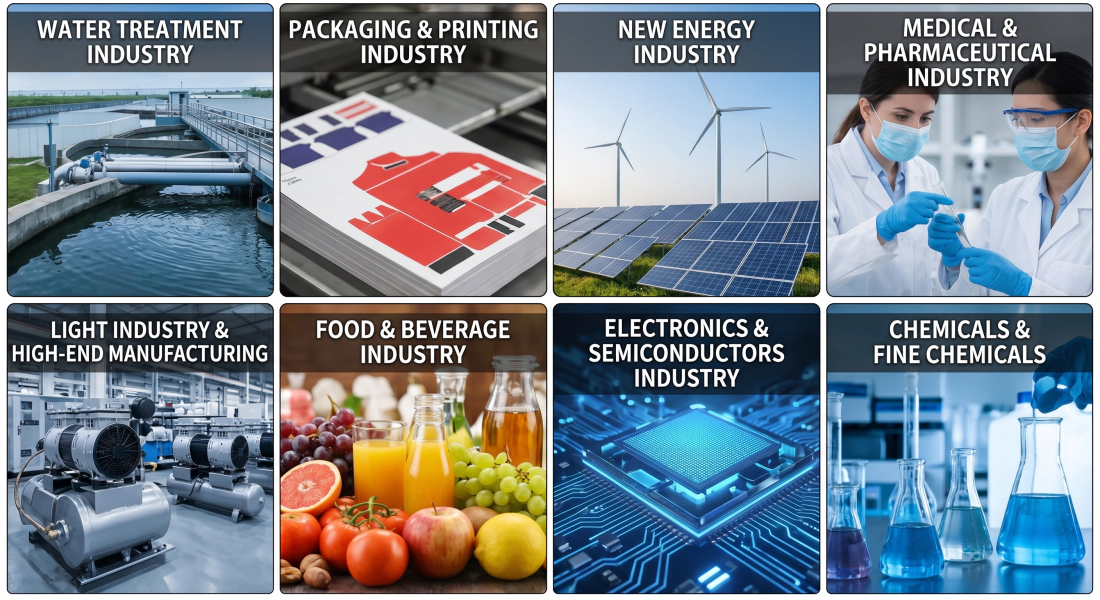
- When to use Oil-Flooded: General metalworking, auto-mechanic shops, cement bagging, and heavy mining. In these dirty environments, trace oil in the air is acceptable and even helps lubricate pneumatic tools.
- When to use Water Injected (EVER POWER): Food packaging, breweries, pharmaceutical labs, and semiconductor clean rooms. In these environments, trace oil destroys products and violates FDA/health regulations.
7. Selection Guide: Making the Switch
If you are upgrading from an old oil-flooded system to an EVER POWER water-injected system, follow these critical steps:
- Upgrade Your Piping: Pumping Class 0 oil-free air into old, oil-soaked galvanized pipes defeats the purpose. You must install new stainless steel or aluminum piping.
- Install an Air Dryer: Water-injected compressors output 100% saturated air. You must install a refrigerated or desiccant dryer to remove the moisture before the air hits your factory floor.
- Assess Ambient Temperatures: Unlike oil machines, water-injected machines cannot be placed outside in freezing winters without specialized heated enclosures. Ensure the compressor room stays above 2 degrees C.
8. Brand Comparison: Evaluating Total Cost of Ownership
Disclaimer: We explicitly state that we mention third-party technologies (e.g., standard oil-flooded machinery) solely for technical comparison, reference, and to assist customers in evaluating solutions. We are an independent manufacturer (EVER POWER). We respect all intellectual property rights.
| Cost Metric | EVER POWER Water Injected | Standard Oil-Flooded Screw |
|---|---|---|
| Initial Purchase Price | Moderate to High | Low (Cheap cast iron) |
| Maintenance Consumables | Low (Water & Air Filters only) | High (Expensive Oil, Separators, Carbon Filters) |
| Waste Disposal Costs | Zero | High (Toxic waste removal fees) |
| Product Liability Risk | Zero (Class 0 Certified) | High (Risk of product recalls) |
9. Quality Certification & Service Commitment
EVER POWER builds equipment under stringent European directives. Fully CE and ISO 9001 certified. We are confident that escaping the oil trap will revolutionize your facility, which is why we provide a 2-year system warranty and a 5-year guarantee on our bronze and ceramic main air-end blocks.
10. Global Case Studies
📍 Client: Microbrewery in the UK
Application: Fermentation tank aeration.
Feedback: “We used to use an oil-flooded compressor with heavy filtration. One day, a filter cracked, and oil ruined a 5,000-liter batch of beer. We switched to the EVER POWER water-injected unit immediately. Total peace of mind.”
📍 Client: Packaging Plant in Poland
Application: Food container blowing.
Feedback: “The environmental compliance rules here regarding toxic condensate disposal from oil compressors were getting incredibly expensive. The EVER POWER machine drains pure water. It solved our compliance headaches instantly.”
📍 Client: Electronics Assembly in Mexico
Application: General clean room pneumatics.
Feedback: “By eliminating the massive inline oil filters, we were able to lower the compressor’s operating pressure by 1 bar, saving us roughly 7% on our electricity bill. The ROI is undeniable.”
11. Upgrade Your Factory Today
Do not gamble your product quality and environmental compliance on outdated oil-flooded technology. Transition to the absolute safety and efficiency of EVER POWER’s 100% oil-free systems. Contact our Dutch engineering team for a comprehensive facility review.
12. Frequently Asked Questions (FAQ)
Q1: Are water-injected compressors harder to maintain?
A: No, they are actually simpler. There are no heavy buckets of hot oil to drain, and no messy air/oil separators to pry open. You simply unscrew the water filter cartridges and the air intake filters at their scheduled intervals.
Q2: If the compressor fails, will water flood my factory lines?
A: No. The machine utilizes a mechanical separation vessel and electronic drain valves. In the event of an emergency shutdown or power loss, the internal valves close automatically, containing the water within the compressor unit safely.