In modern manufacturing, electricity costs account for over 70% of a compressor’s lifetime total cost of ownership. For facilities requiring 100% oil-free air, the choice usually comes down to Water Injected or Dry Screw technology. As a leading engineering firm based in the Netherlands, EVER POWER breaks down the definitive energy efficiency comparison between these two heavyweights.
1. Product Overview: The Battle for Efficiency
Both technologies deliver ISO 8573-1 Class 0 oil-free air, but their thermodynamic paths are completely different. Dry screws rely on high-speed, high-heat two-stage compression, whereas water injected systems utilize the immense cooling power of water to achieve near-isothermal single-stage compression.
- Quick Industry Applicability: High-volume users like semiconductor fabs, large textile mills, and mega-breweries where energy bills are paramount.
- Core Advantages Summary: The water-lubricated approach inherently requires less electrical input per cubic meter of air produced, directly lowering your factory’s base load power draw.
2. Technical Parameters (Energy Focus)
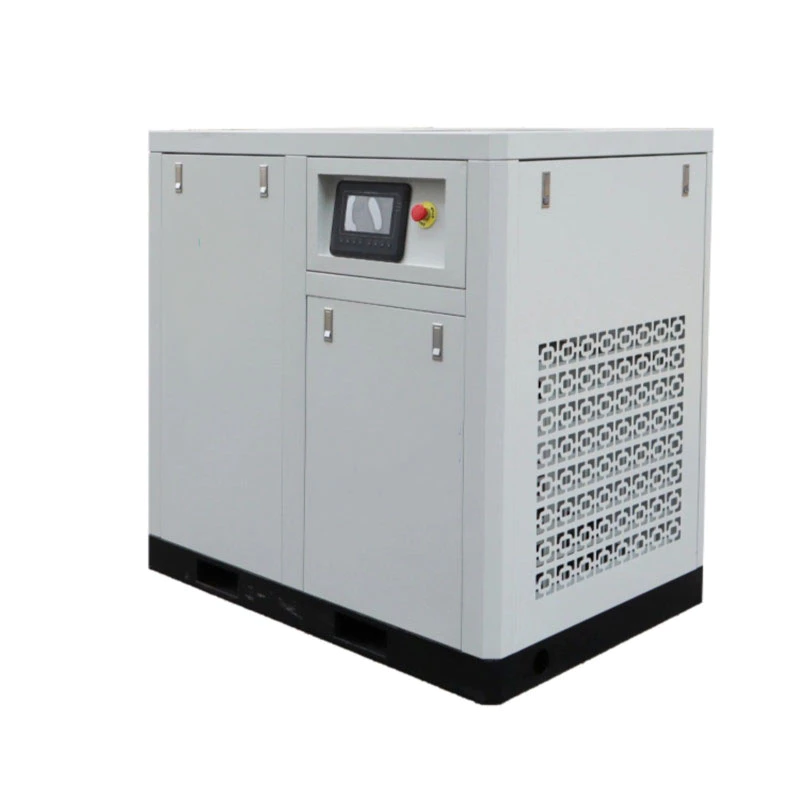
Let’s look at the performance metrics of our high-efficiency EP-WI line.
| Compressor Model | Motor Rating (kW) | Specific Energy Requirement (kW/m3/min) | Operating Temp (degrees C) |
|---|---|---|---|
| EP-WI-37 VFD | 37 | ~ 6.2 (Highly Efficient) | < 50 |
| EP-WI-75 VFD | 75 | ~ 5.9 (Highly Efficient) | < 50 |
| EP-WI-132 VFD | 132 | ~ 5.7 (Ultra Efficient) | < 50 |
| Standard Dry Screw | 132 | ~ 6.5 to 7.0 (Less Efficient) | 150 – 200 |
3. Working Principle: Isothermal vs. Adiabatic
When you compress air, the energy doesn’t just increase pressure; it generates massive heat.
Dry Screw (Adiabatic): Without liquid to cool the rotors, the air gets incredibly hot (up to 200 degrees C). Hot air expands, pushing back against the rotors, meaning the motor has to work harder. The air must then exit, go through a massive intercooler, and enter a second stage to reach target pressure, wasting energy in the transition.
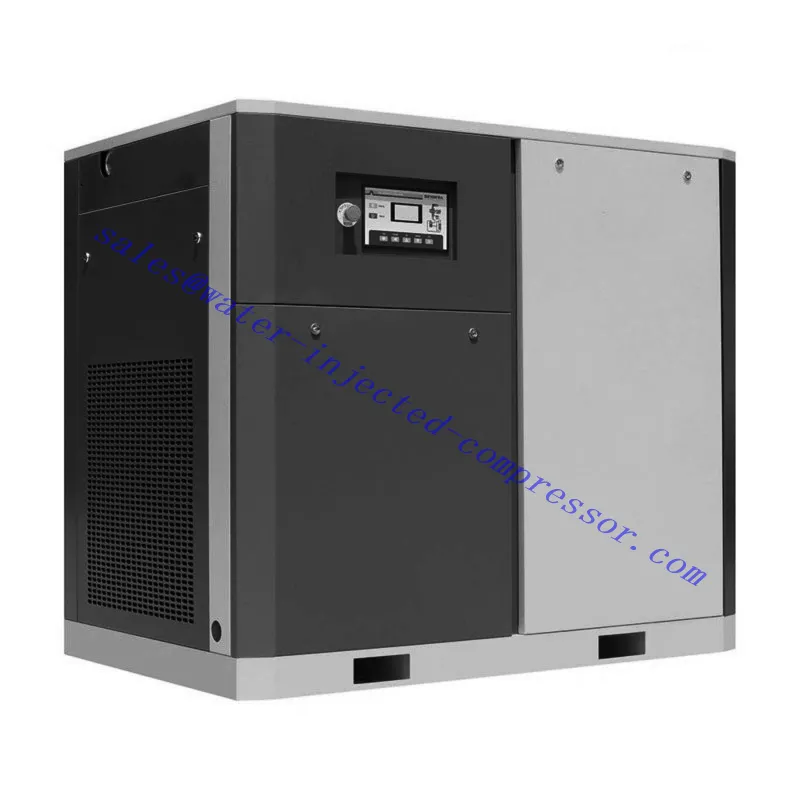
Water Injected (Isothermal): EVER POWER sprays RO water directly into the compression chamber. Water instantly absorbs the heat, keeping the air cool (under 50 degrees C). Cool air is denser and easier to compress, allowing us to reach 10 bar in a single, highly efficient stage. Less work for the motor equals less electricity on your bill.
4. Five Core Efficiency Advantages
📉 Lower Specific Energy
Produces more cubic meters of air per kilowatt of electricity consumed compared to high-heat dry screw counterparts.
🌀 Zero Interstage Loss
By compressing in a single stage, we eliminate the pressure drop and piping friction losses associated with two-stage dry compressors.
💧 Superior Volumetric Sealing
The water film perfectly seals the rotor clearances, preventing high-pressure air from slipping backward and wasting mechanical effort.
🎛️ VFD Synergy
Combining the isothermal air-end with a Variable Frequency Drive ensures you only pay for the exact amount of air your factory is using at any given second.
❄️ Reduced Cooling Load
With discharge temperatures below 50 degrees C, your downstream air dryers consume less energy to reach the required dew point.
5. Structure and Thermal Craftsmanship
To maximize efficiency, mechanical friction must be eliminated. Dry screws require extreme rotation speeds (often over 10,000 RPM) to prevent air slippage, requiring massive power. EVER POWER water injected rotors operate at a fraction of that speed (typically around 3,000 RPM). The heavy-duty bronze housing and precision polymer rotors utilize the water film for flawless low-friction rotation, extending the life of the motor and bearings significantly.
6. Typical Application Scenarios (Energy Focused)
When electricity is the primary concern, this technology shines:
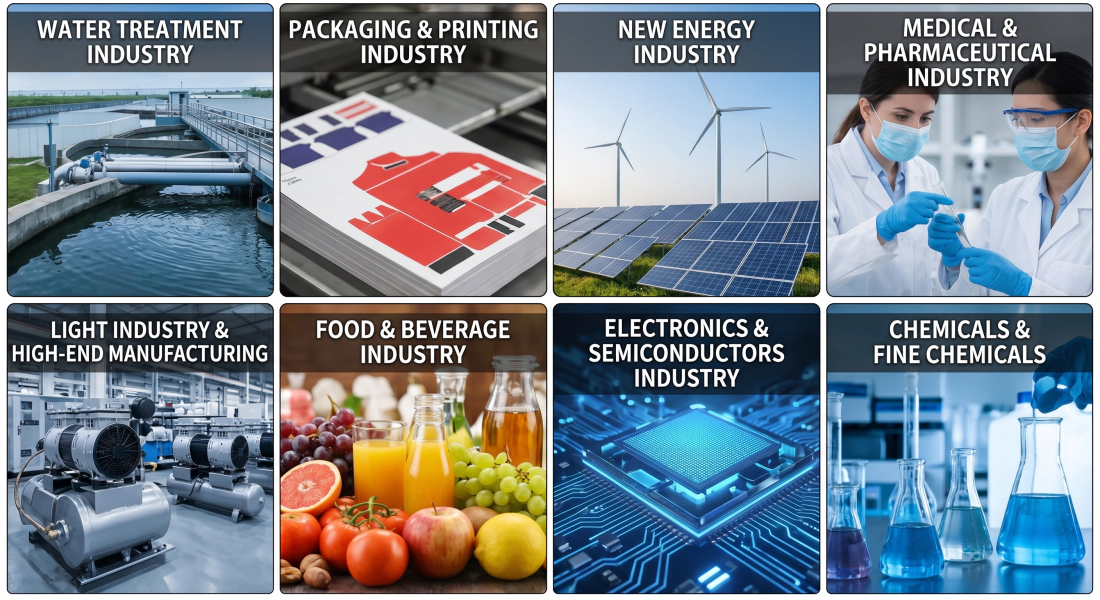
- Continuous Textile Spinning: Air-jet looms operate 24/7. A 10% saving on a 132kW compressor equates to thousands of dollars in profit every month.
- Large Scale Glass Manufacturing: Requires immense volumes of clean air. The isothermal process keeps base-load power costs incredibly low.
- Biogas & Wastewater Treatment: High-volume aeration processes benefit heavily from the VFD and isothermal synergy.
7. Selection Guide: Calculating Your ROI
To ensure you get the most efficient unit, check these parameters:
- Request the Specific Energy Curve: Don’t just look at max capacity. Ask for the kW/m3/min rating at 60%, 80%, and 100% load. EVER POWER units maintain high efficiency across the curve.
- Size Correctly: An oversized compressor running at 30% load is terribly inefficient. If your demand is highly variable, a VFD model is mandatory.
- Evaluate Heat Recovery: Water-injected systems make it incredibly easy to recover the compression heat via the water circuit, allowing you to pre-heat boiler water for your factory for free.
8. Brand Comparison: Engineering Truths
Disclaimer: We explicitly state that we mention third-party brands and technologies solely for technical comparison, reference, and to assist customers in model selection. We are an independent manufacturer (EVER POWER). We respect all intellectual property rights.
| Efficiency Metric | EVER POWER (EP-WI Series) | Legacy Brand Dry Screw |
|---|---|---|
| Compression Stages | 1 (Highly Efficient) | 2 (Friction & Transition Loss) |
| Operating Speed | Low RPM (~3000) | Extreme RPM (>10,000) |
| Capital Expenditure | Affordable (Fast ROI) | Very High |
9. Quality Certification & Warranty
We build our machines with Dutch engineering integrity. Fully CE marked and ISO 9001 certified. We are so confident in our energy-saving mechanics that we back the high-efficiency air-end with a 5-year guarantee and the overall system with a 2-year warranty.
10. Global Case Studies
📍 Client: Electronics Manufacturer in South Korea
Application: Clean room air supply.
Feedback: “We replaced two old 75kW dry screws with one EVER POWER 132kW VFD water-injected unit. Our energy auditor confirmed a 16% drop in our pneumatic power consumption. The payback period on this machine is less than two years.”
📍 Client: Chemical Plant in Italy
Application: Nitrogen generation feed air.
Feedback: “The low discharge temperature of the water-lubricated machine meant our downstream refrigeration dryers used much less electricity. EVER POWER offered a complete efficiency ecosystem.”
📍 Client: Food Processing in Poland
Application: Factory automation.
Feedback: “Excellent cost-to-performance ratio. We not only met our ISO 8573-1 Class 0 requirements, but the isothermal compression lowered our factory’s peak energy demands, saving us from utility penalties.”
11. Slash Your Energy Bills Today
Do not let outdated, high-heat dry screw compressors drain your factory’s profitability. Contact the EVER POWER team today to receive a free energy audit comparison and a customized quotation for your facility.
12. Frequently Asked Questions (FAQ)
Q1: If it uses less electricity, does it consume a lot of expensive water?
A: No. The water operates in a closed internal loop. It only consumes a tiny amount to replace evaporation losses and periodic flushing. The water cost is statistically insignificant compared to the massive electrical savings.
Q2: Why do dry screws require two stages?
A: Because they have no cooling liquid injected, compressing air from 1 bar to 10 bar in a single stage would generate temperatures high enough to melt the Teflon coatings on the rotors and potentially cause fires. Water injection solves this thermally, allowing one efficient stage.